Yue Kwong Chuen was built between 1962 and 1965. During its initial development, architects hand-drew multiple architectural drawings, including the overall layout plan. In recent years, floor plans have been redrawn digitally, presenting an alternative side of the estate as it has evolved over time.
Overall Layout of Yue Kwong Chuen
Layout Plan
This hand‑drawn layout plan of Yue Kwong Chuen, produced by T.C. Yuen & Co., clearly presents the low‑density, well‑balanced layout of the estate’s five residential blocks. The buildings are interconnected by staircases, with multiple public spaces preserved.
Pak Sha Lau and Hoy Au Lau
Floor plan
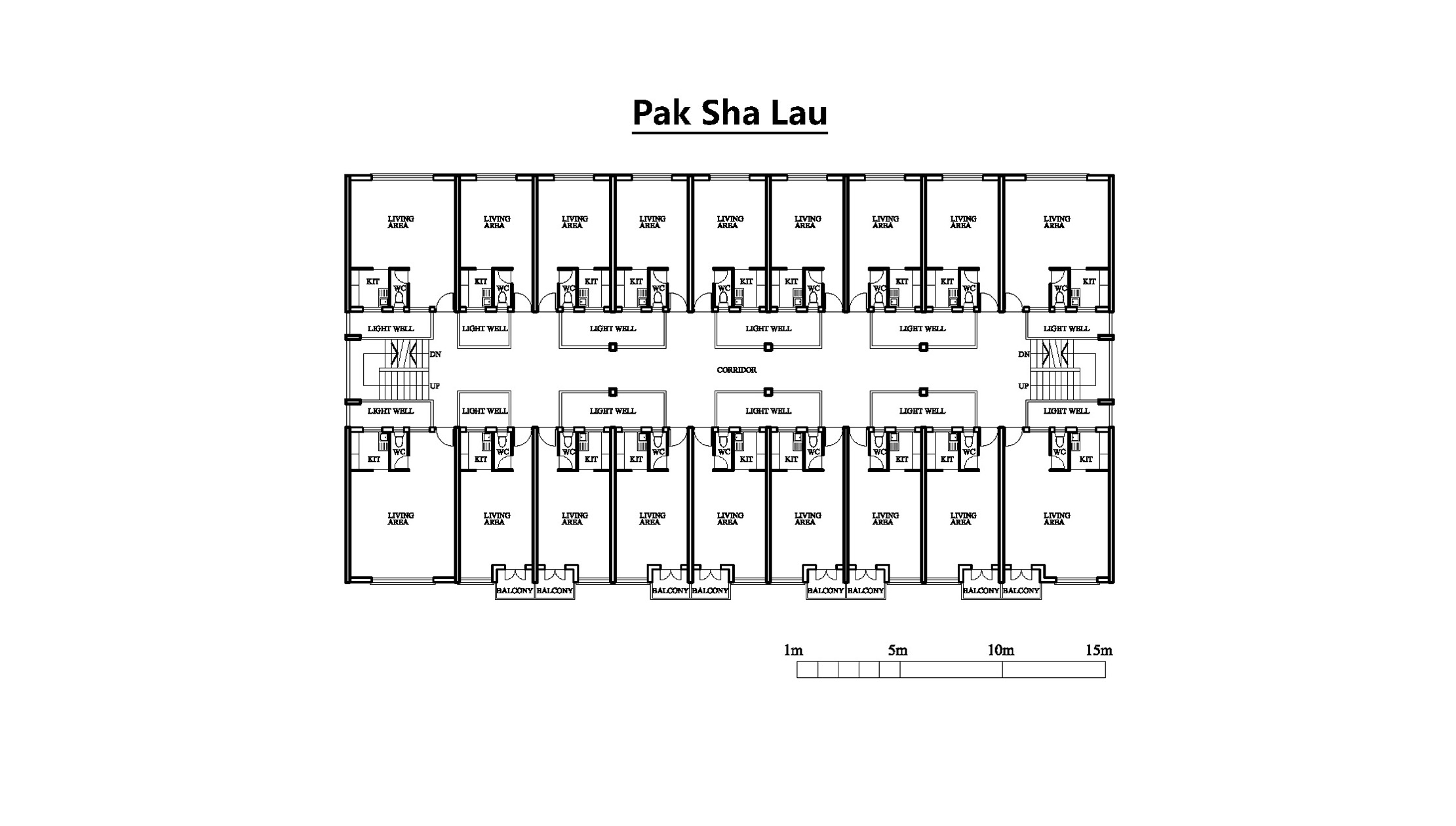
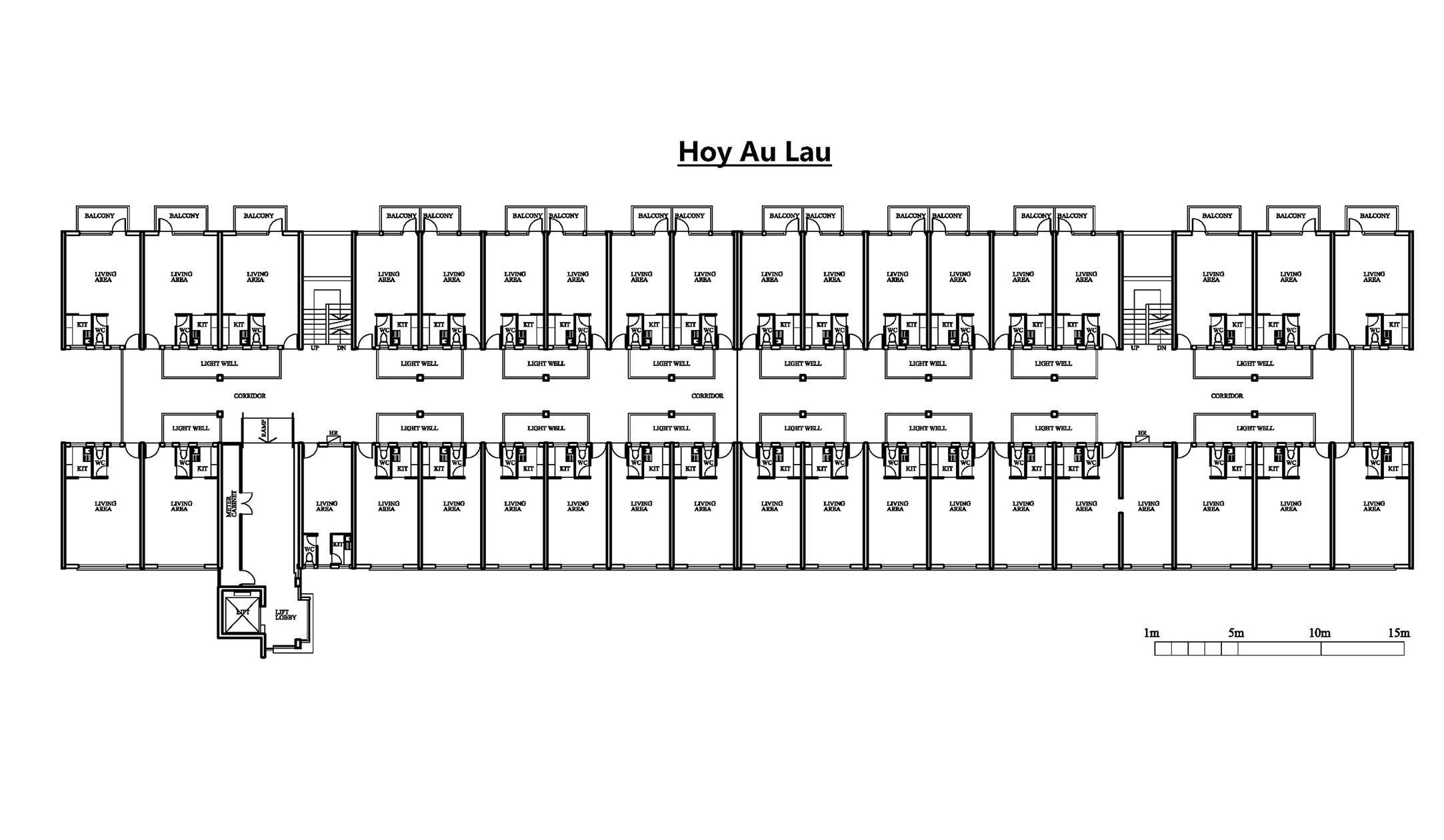
Apart from Hoy Kong Lau, the other four blocks in Yue Kwong Chuen share a similar rectangular design with central corridors and light wells, forming unique and airy covered communal spaces. In Pak Sha Lau and Hoy Au Lau, flats facing the Aberdeen Reservoir Road and Yue Kwong Road are fitted with balconies for drying laundry or placing potted plants. Hoy Au Lau was refurbished in 2012, which include the installation of a lift for residents’ use.
The architect of Yue Kwong Chuen employed a terraced layout, central corridors, and open lightwells to maximise natural daylight and cross-ventilation. From the architect’s perspective, we document the estate’s architectural features through drawings, exploring a design approach that balances functionality and aesthetics while savouring the ingenuity embedded in its design.
Charles Lai, Ph.D
Charles Lai is an architect (UK) and Architectural Historian. His research focuses on the history of Modern Architecture in East and Southeast Asia, as well as the conservation of historical built heritages.
Environment and Overall Layout of Yue Kwong Chuen
Panoramic Aerial View
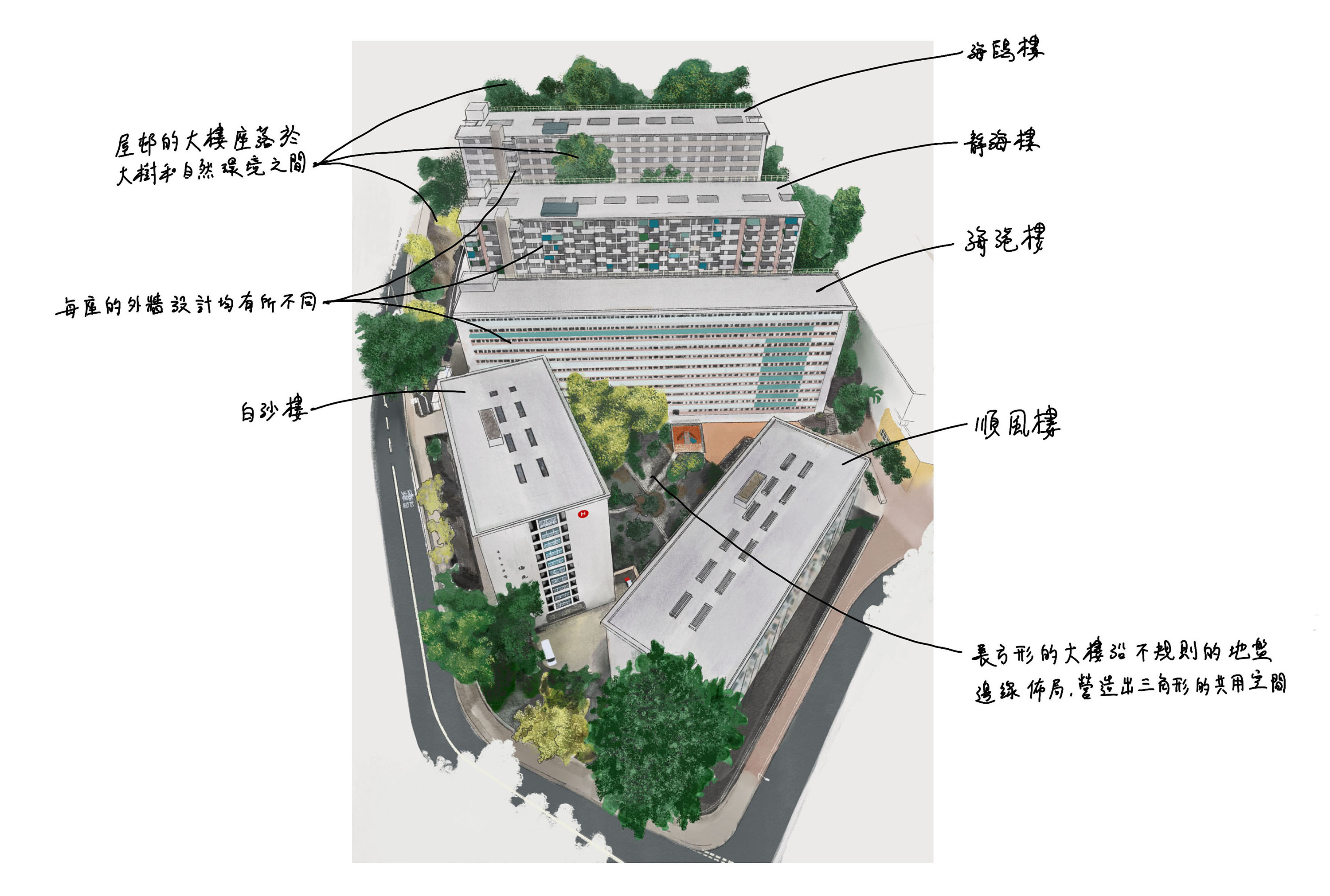
This aerial view illustrates the overall layout of Yue Kwong Chuen, which was built against the hillside. The rectangular blocks are arranged in accordance with the irregular natural terrain, blending perfectly with the slopes behind. Through the clever positioning of the buildings, the architect created ample triangular public spaces, fully demonstrating a design ingenuity where architecture and the natural environment harmoniously coexist.
Grand Staircase and Communal Space Outside Hoy Kong Lau
Elevation Drawing
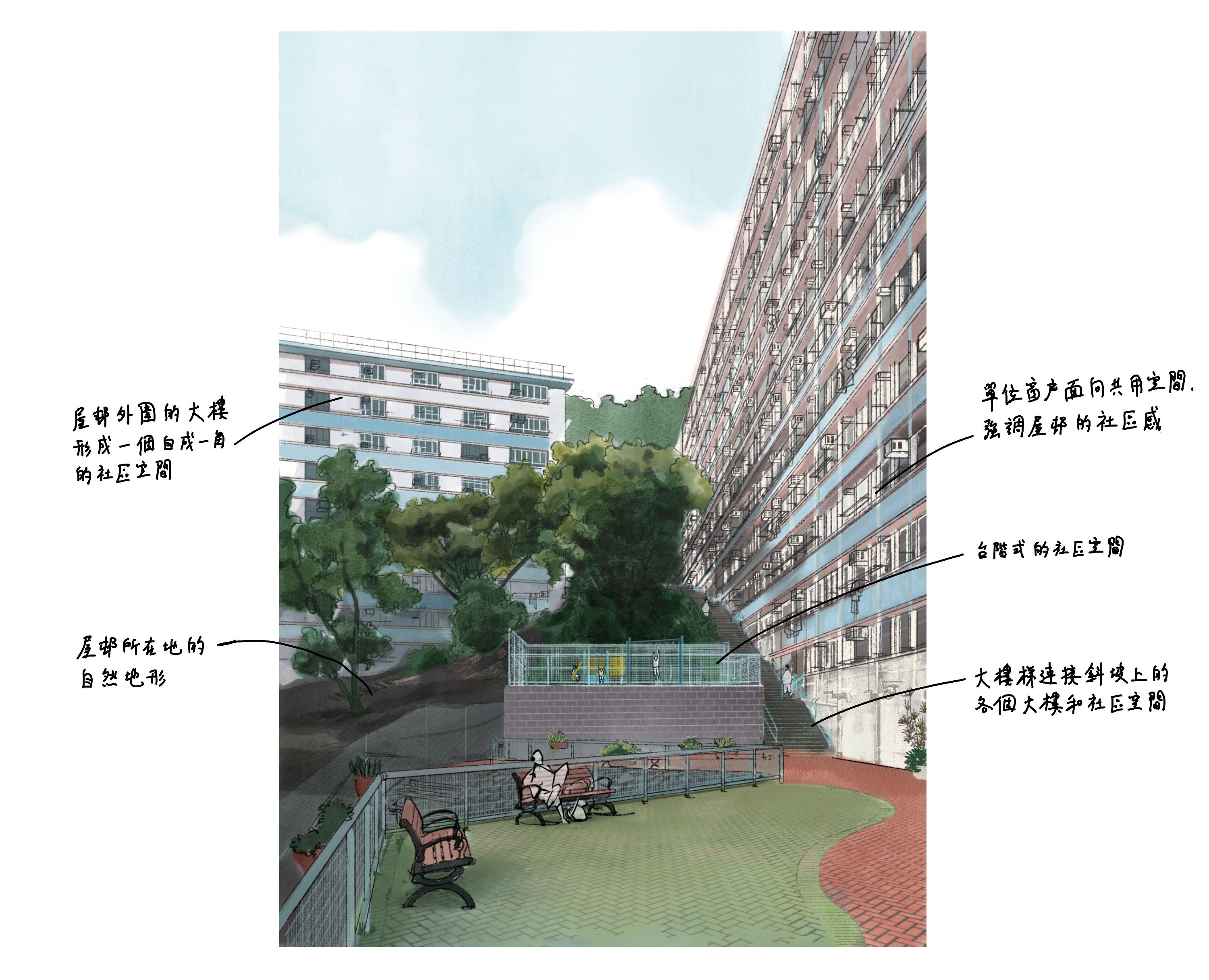
This drawing demonstrates Yue Kwong Chuen’s design, which conforms to the natural topography. The peripheral blocks enclose a tranquil community space, connecting the terraced recreational areas on the slope with a grand staircase. The flat windows uniformly face this shared realm, subtly bridging the distance between neighbours and profoundly fostering the unique cohesiveness and strong sense of community within the estate.
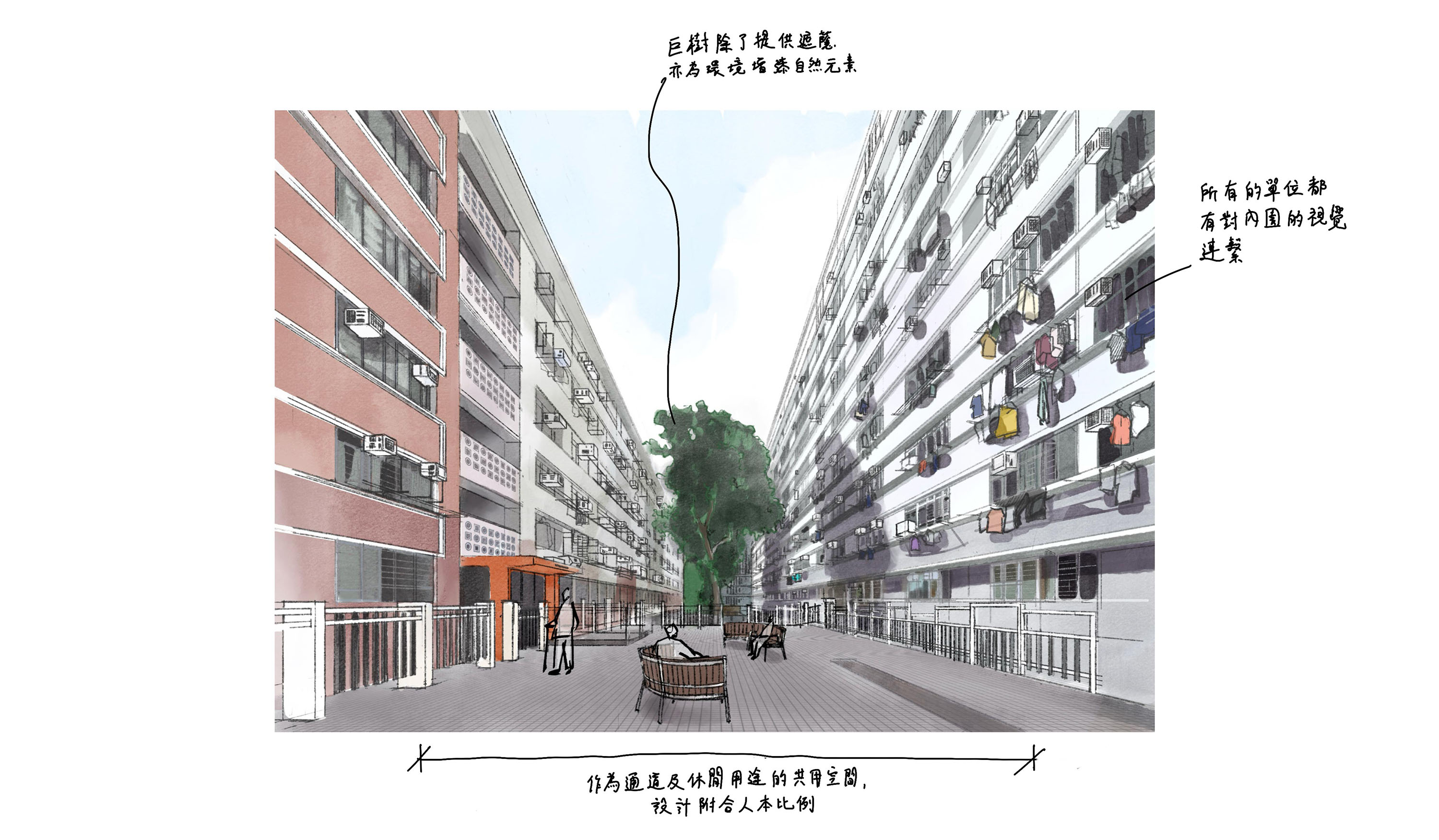
Communal Space Between Hoy Au Lau and Ching Hoy Lau
Inner Courtyard Perspective Drawing
This perspective drawing illustrates the communal space between the blocks, serving both as a passageway and a recreational area. The spatial design adheres to human scale and is complemented by a giant tree providing natural shade, infusing the environment with a touch of nature. All flats on both sides enjoy a visual connection facing the inner courtyard, cleverly drawing the daily lives of residents closer to the natural greenery.
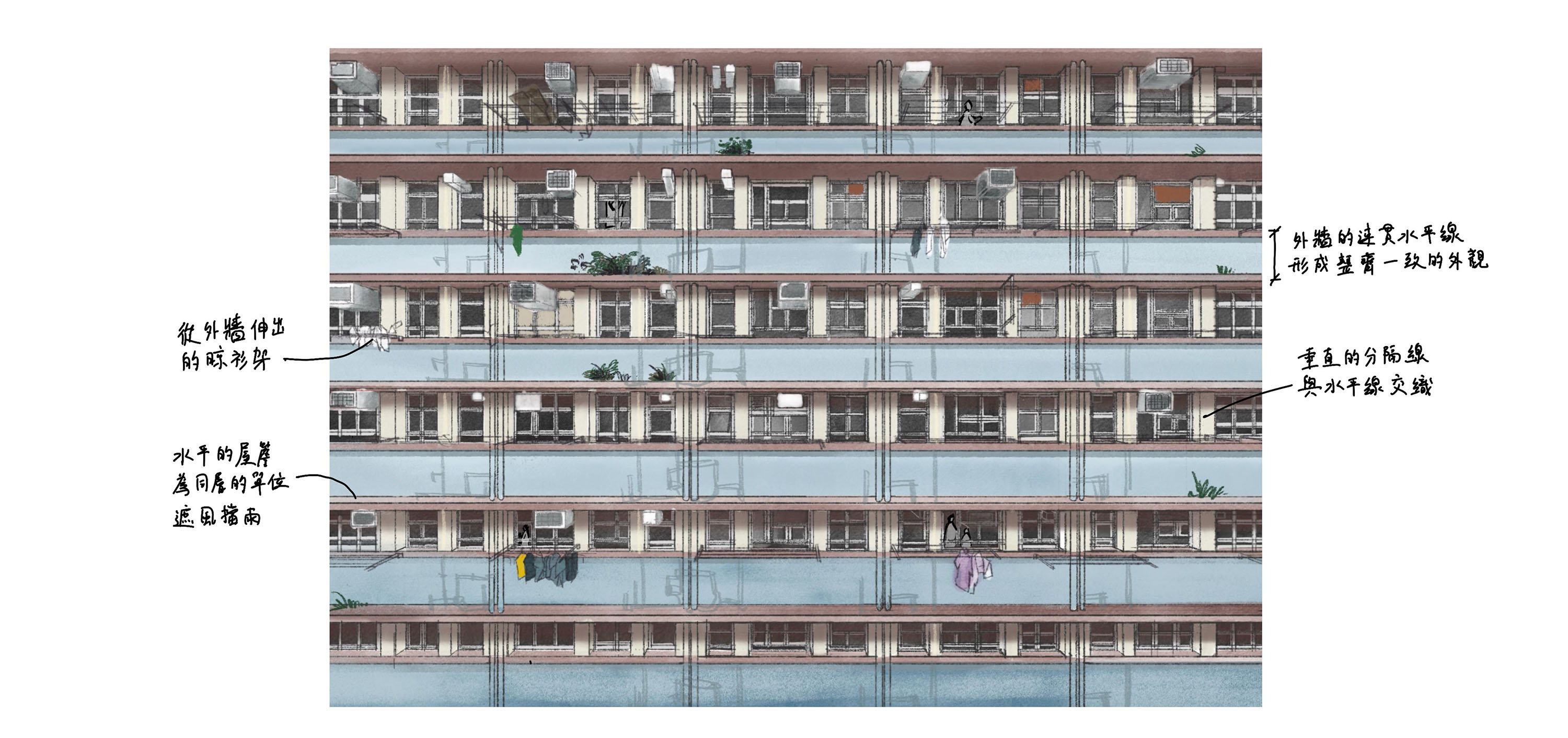
Southwest Elevation of Hoy Kong Lau
Elevation Drawing
This elevation drawing depicts the neat and uniform exterior of Hoy Kong Lau. The continuous horizontal lines interweave with vertical dividers to create a geometric aesthetic, which, coupled with the horizontal eaves that provide shelter from the elements, exemplifies a minimalist and practical design. The clothes-drying racks extending from the exterior walls, interspersed with scenes of daily life, inject a strong sense of community vitality into the rhythmic architectural façade.
Northeast Elevation of Hoy Kong Lau
Elevation Drawing
This elevation drawing portrays the daily scenery where the building’s façade intertwines with the surrounding lush trees. The variously styled balcony balustrades create a lively visual rhythm on the exterior walls. Furthermore, the architect cleverly utilised the lightwell to introduce natural lighting and ventilation to the staircase behind, perfectly balancing architectural aesthetics with the practical living needs of the residents.
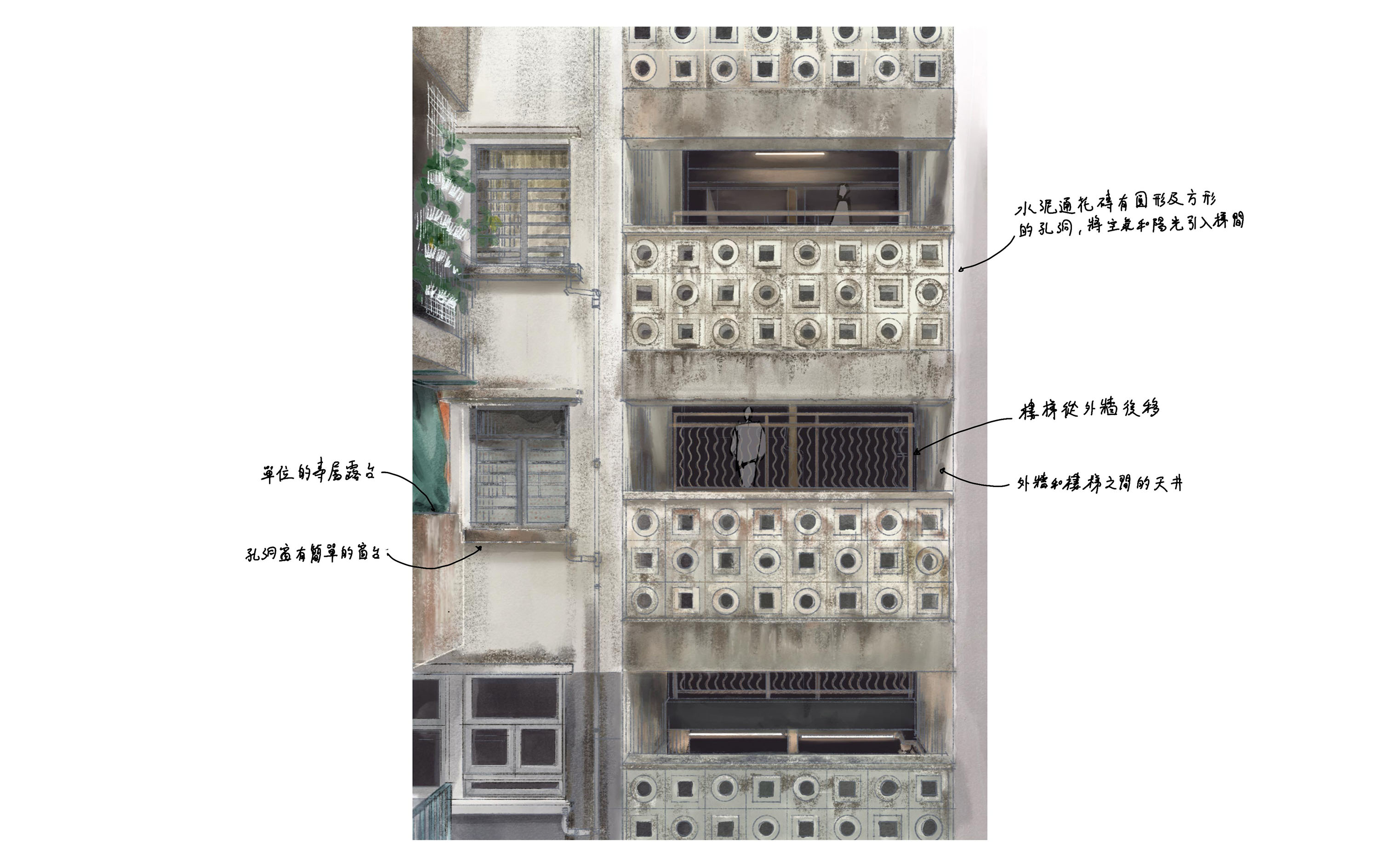
Details of the Perforated Brick Screen on Hoy Au Lau's Exterior Wall
Partial Elevation Drawing
This partial elevation drawing focuses on the staircase design of Hoy Au Lau. The exterior walls feature concrete breeze blocks with circular and square openings, ingeniously channelling sunlight and natural breezes indoors. The architect deliberately set the staircase back to create a lightwell, which, paired with the flats’ balconies and minimalist window sills, flawlessly blends geometric aesthetics with practical ventilation and lighting functions.
Eaves Design of Hoy Kong Lau
Partial Elevation Drawing
This drawing vividly captures the visual interest of the building’s exterior wall. The architect transformed the eaves into continuous frames surrounding the windows, outlining a simple and orderly visual language. Coupled with the clothes-drying racks outside the windows and the figures of residents traversing the open staircase, a dynamic lively atmosphere is evoked against the static architectural façade.
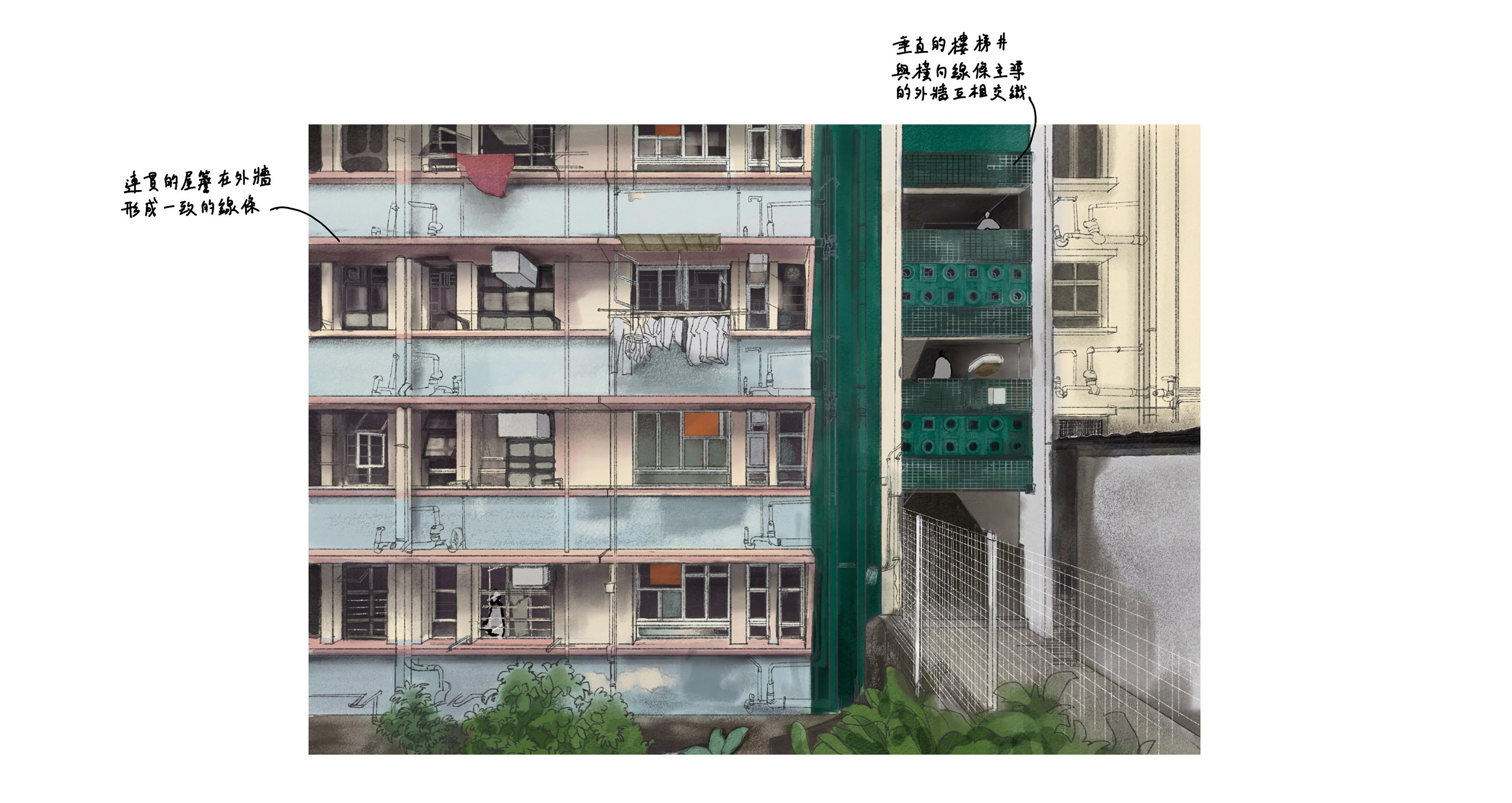
North-Eastern Façade of Hoy Kong Lau
Partial Elevation Drawing
This drawing showcases the unique geometric beauty of Hoy Kong Lau’s exterior wall. The continuous horizontal eaves form consistent lines across the façade, creating a strong visual contrast and intersection with the vertical stairwell. This intertwining of horizontal and vertical elements not only highlights the minimalist style of modernist architecture but also adds a rich, three-dimensional depth to the building’s appearance.
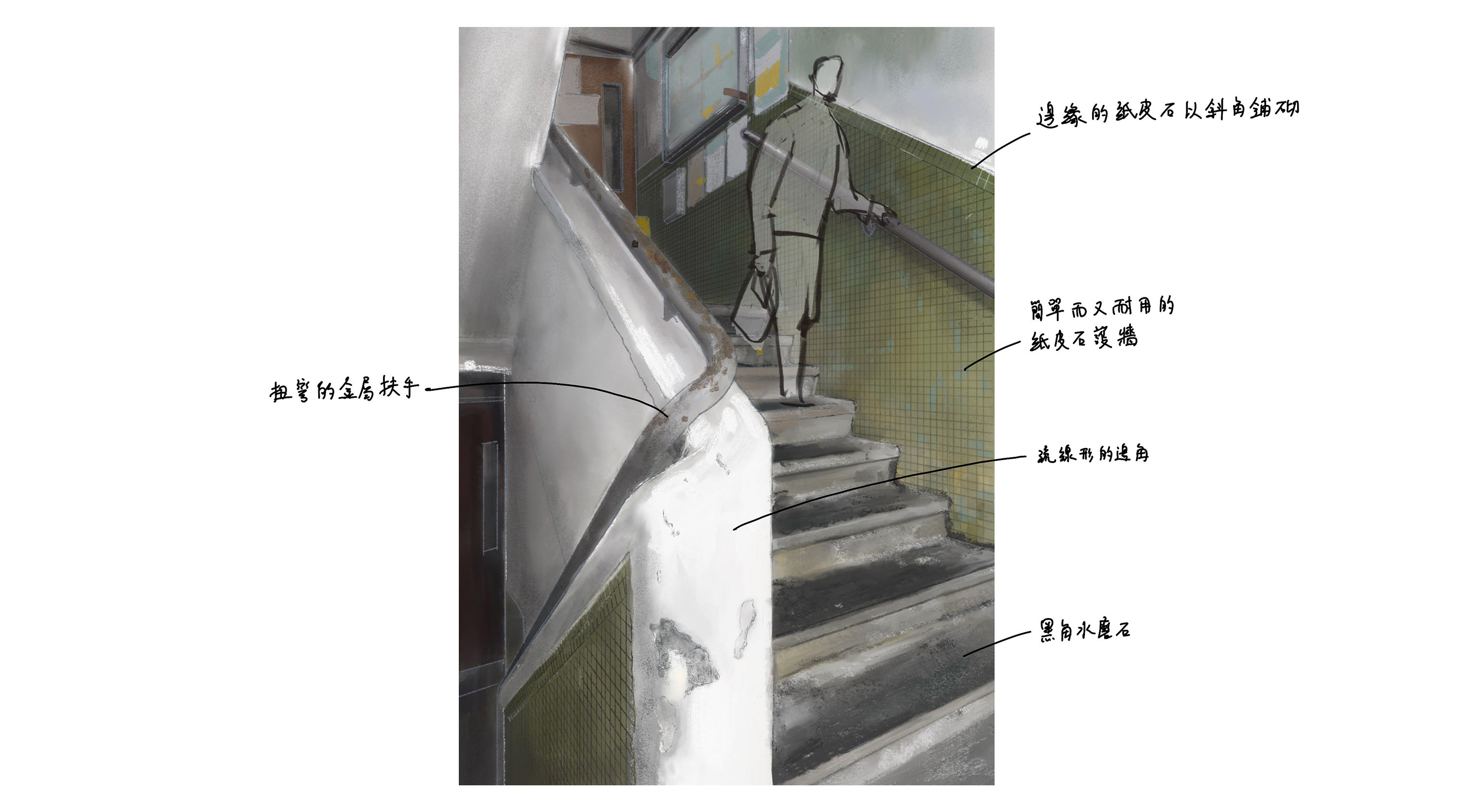
Architectural Details of the Stairwell
Interior Perspective Drawing
This drawing focuses on the details of the stairwell. The architect used durable mosaic tiles for the wainscoting with bevelled edges, paired with black terrazzo steps and streamlined corners, showcasing a blend of practicality and aesthetics. The twisted metal handrail follows the ascent of the steps, adding a delicate touch to the residents’ daily journeys up and down the stairs.