
Aesthetic Architecture
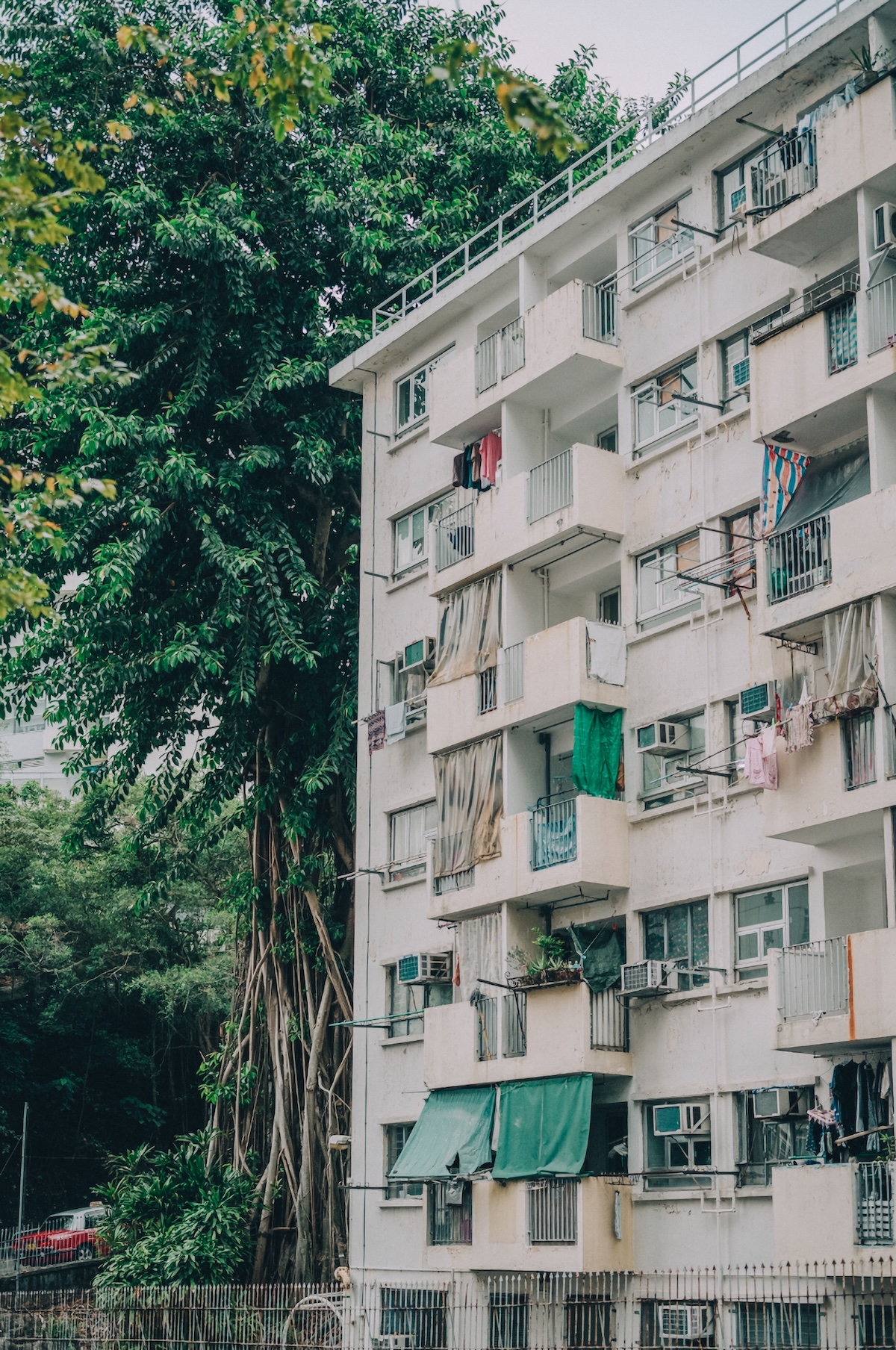
The design of Shun Fung Lau's balconies creates the distinctive exterior of Yue Kwong Chuen.
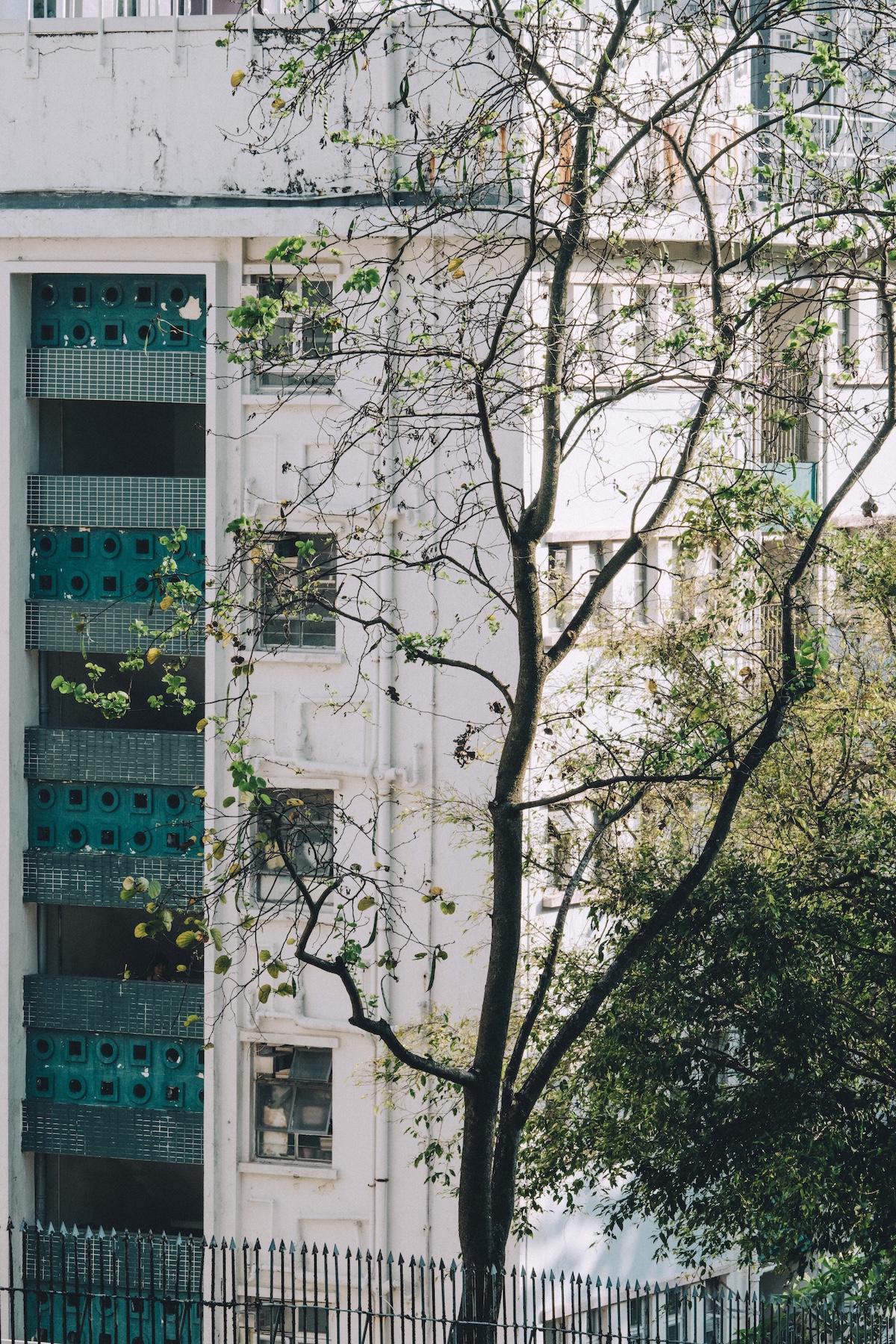
Compared to the later-constructed Ching Hoy and Hoy Au Lau, the earlier Hoy Kong Lau features a more distinct green geometric lattice screen.

The layout of each building is clear and distinct.

The design preserves the original hillside terrain, allowing the buildings to coexist with the topography in a staggered layout, reflecting the planning concepts of the 1960s.

The staggered buildings are connected by staircases, which residents gradually ascend.
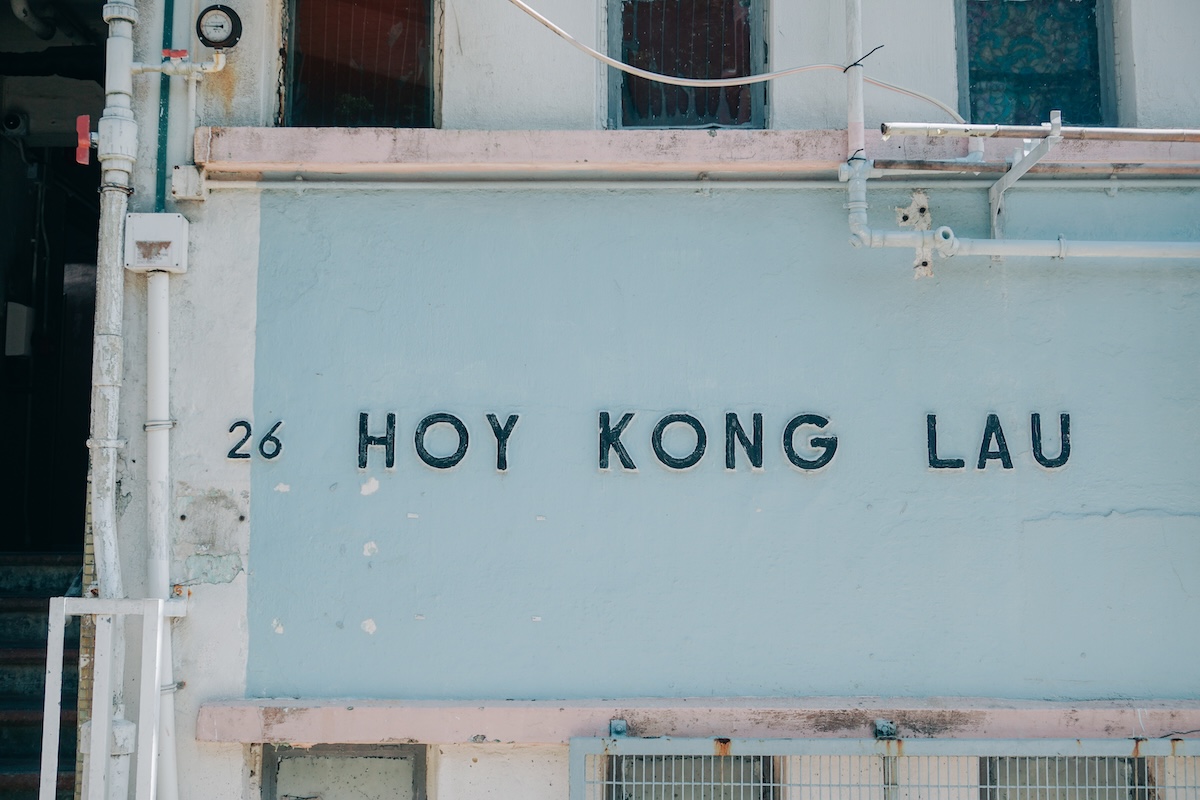
"26" refers to 26 Aberdeen Reservoir Road. The English name for Hoy Kong Lau uses a clean, sans-serif typeface.
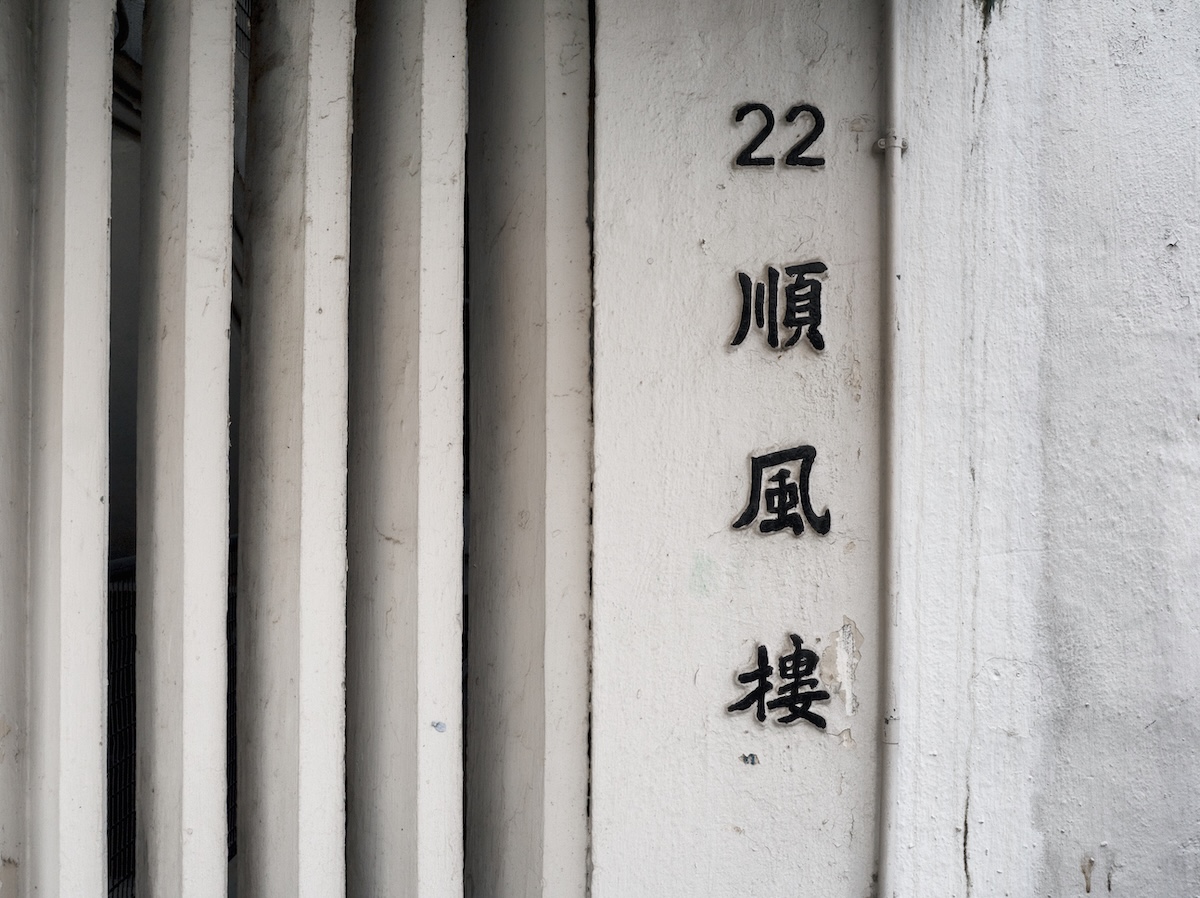
Hand-carved calligraphy is still visible on the wall of Shun Fung Lau. The character "樓" (Lau/House) uses an uncommon variant form, often seen on old building nameplates, which contrasts with the uniform style of modern computer fonts.
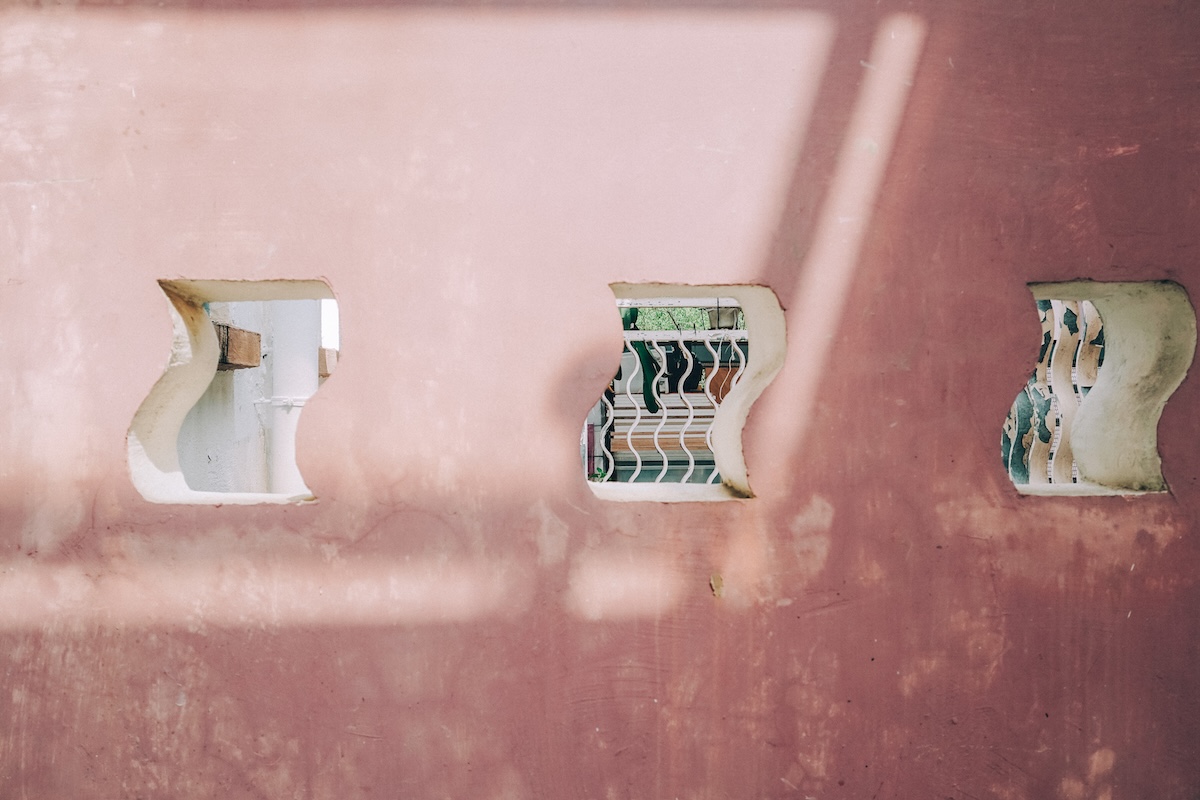
The walls and railings of Ching Hoy House are decorated with wave patterns, echoing a maritime theme.
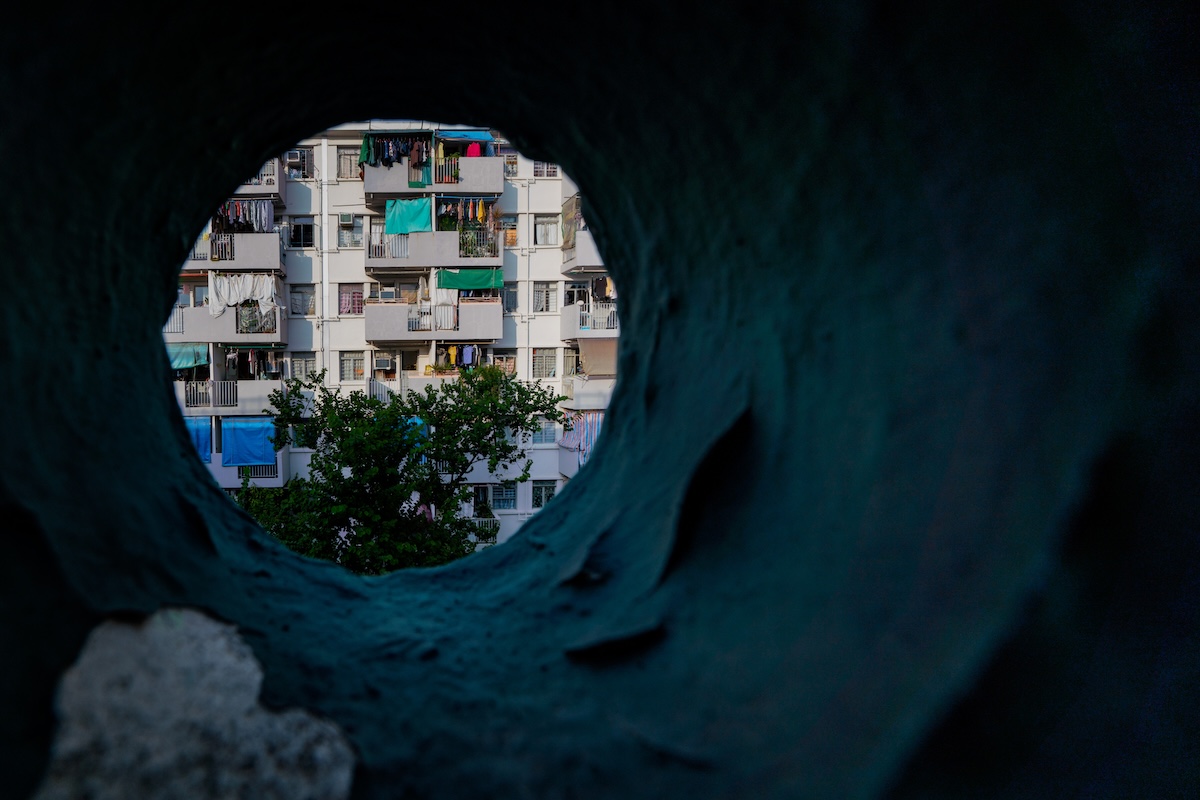
The circular grille is intricately detailed up close, its geometric design showcasing the modern architectural style prevalent during the estate's construction in the 1960s.

The central corridors of Shun Fung Lau, Pak Sha Lau, Ching Hoy Lau, and Hoy Au Lau feature vertical atriums, a design element that both introduces natural light and enhances ventilation.
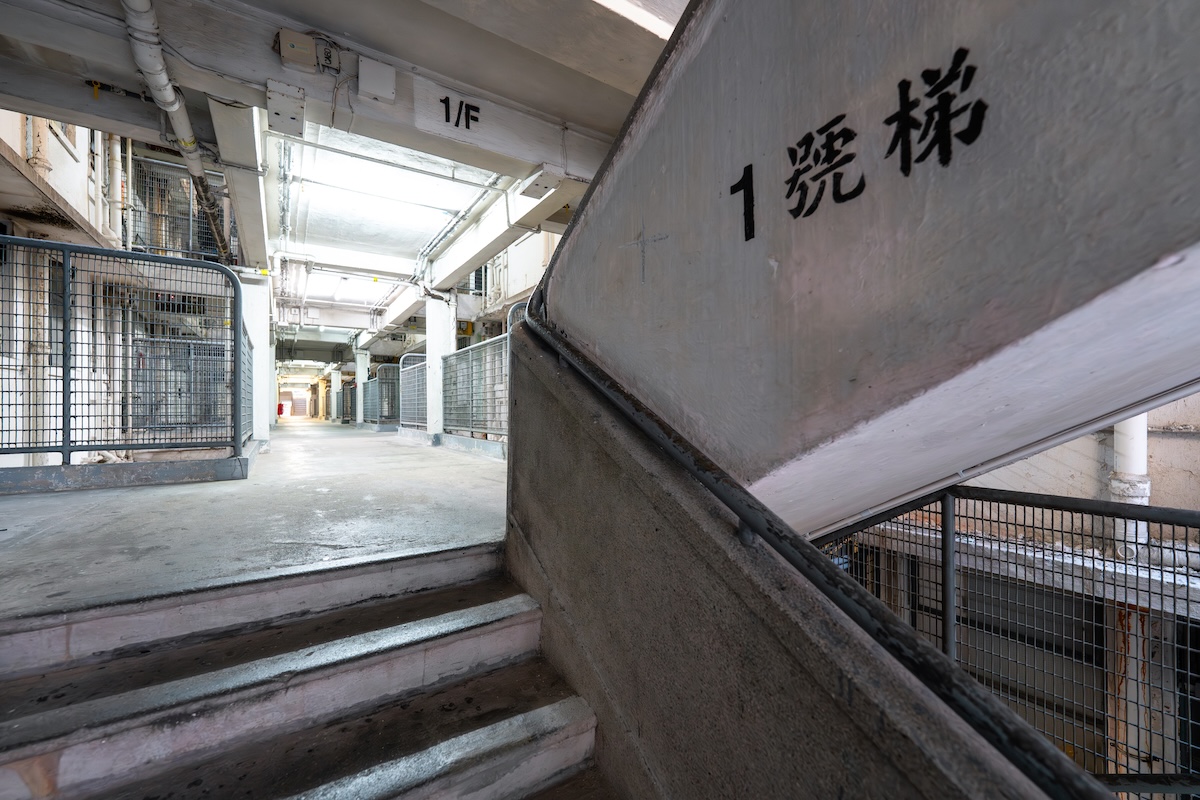
Old stencil-painted lettering, with its bold, powerful strokes, remains visible in the stairwells and on the floors, preserving the traces of traditional craftsmanship.
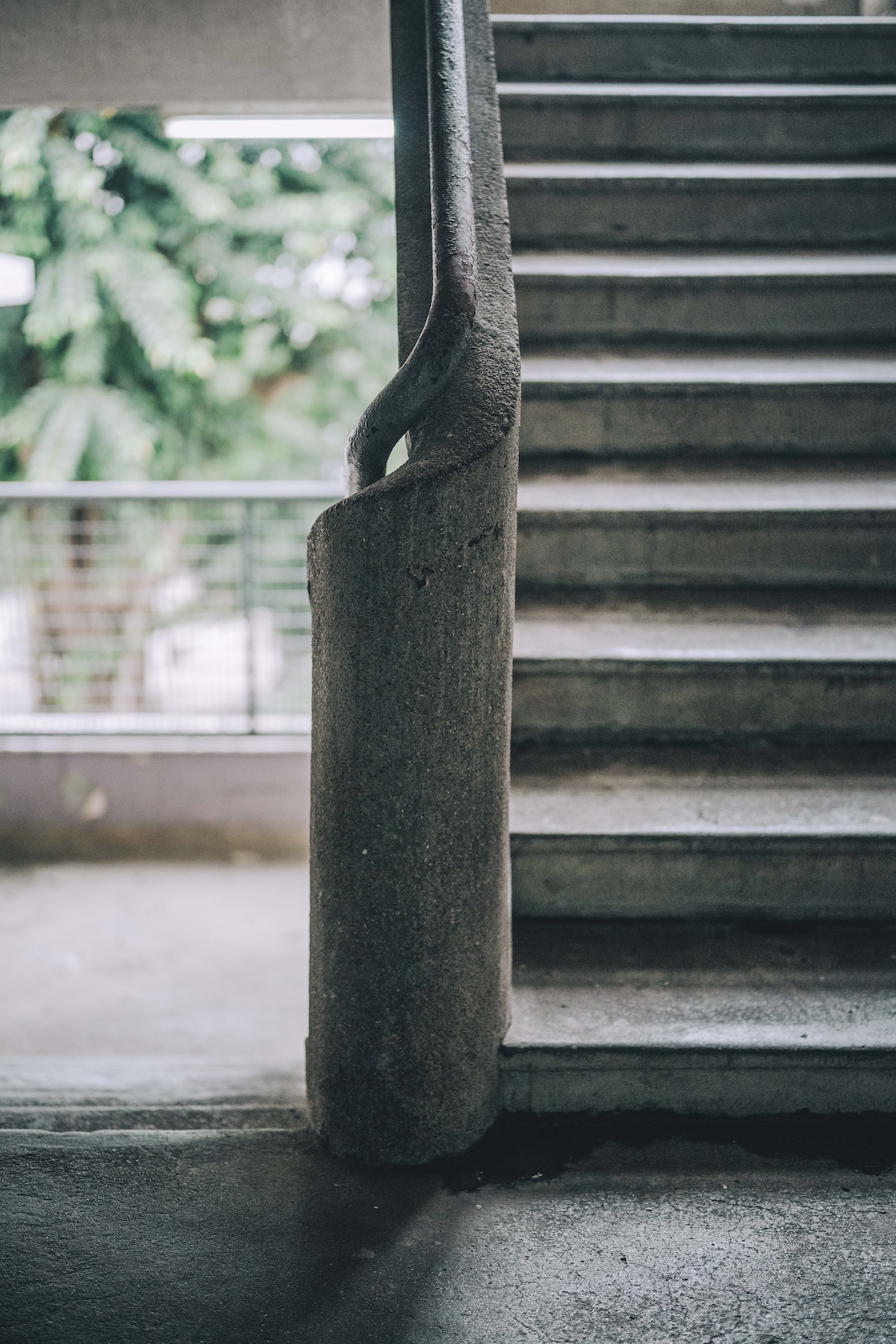
The stairwell landings of Pak Sha Lau and Shun Fung Lau are made of terrazzo, a traditional and versatile craft common in the last century. Its soft curves bring a unique aesthetic quality to the building.
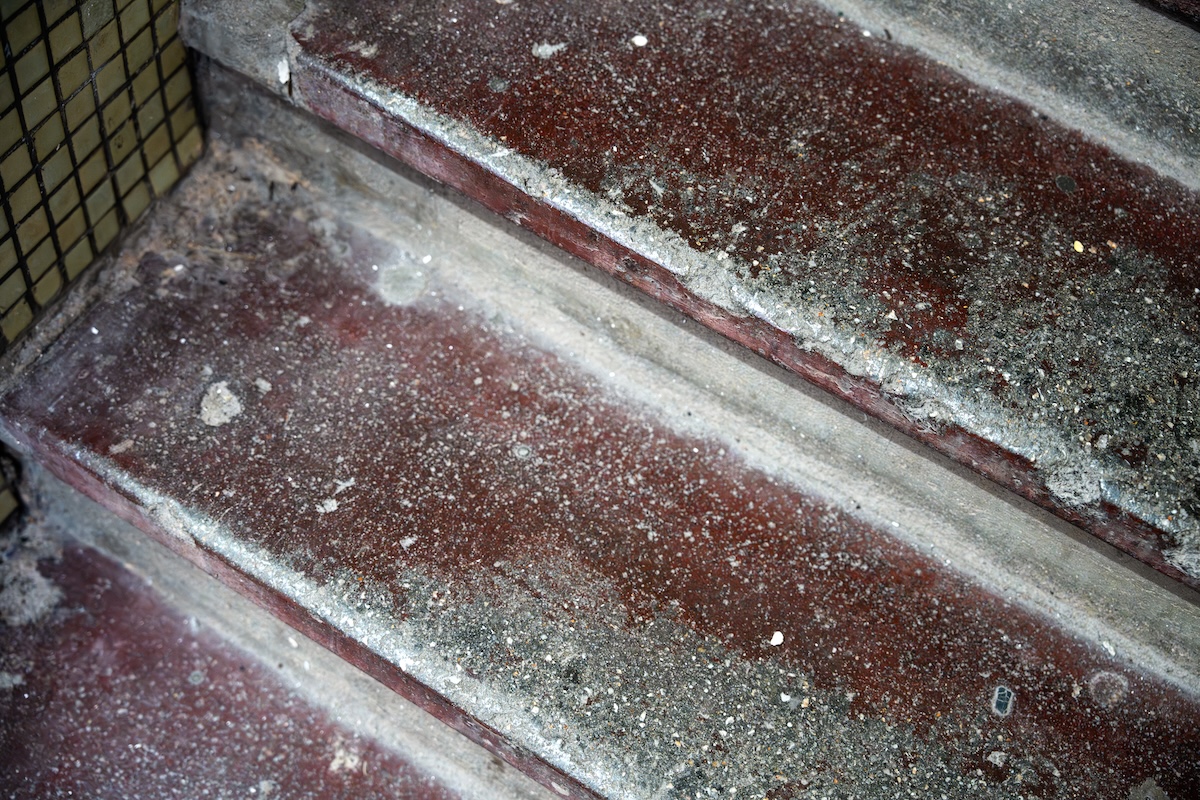
Marks of time are visible on the terrazzo stairs, documenting the daily lives of Yue Kwong Chuen residents.
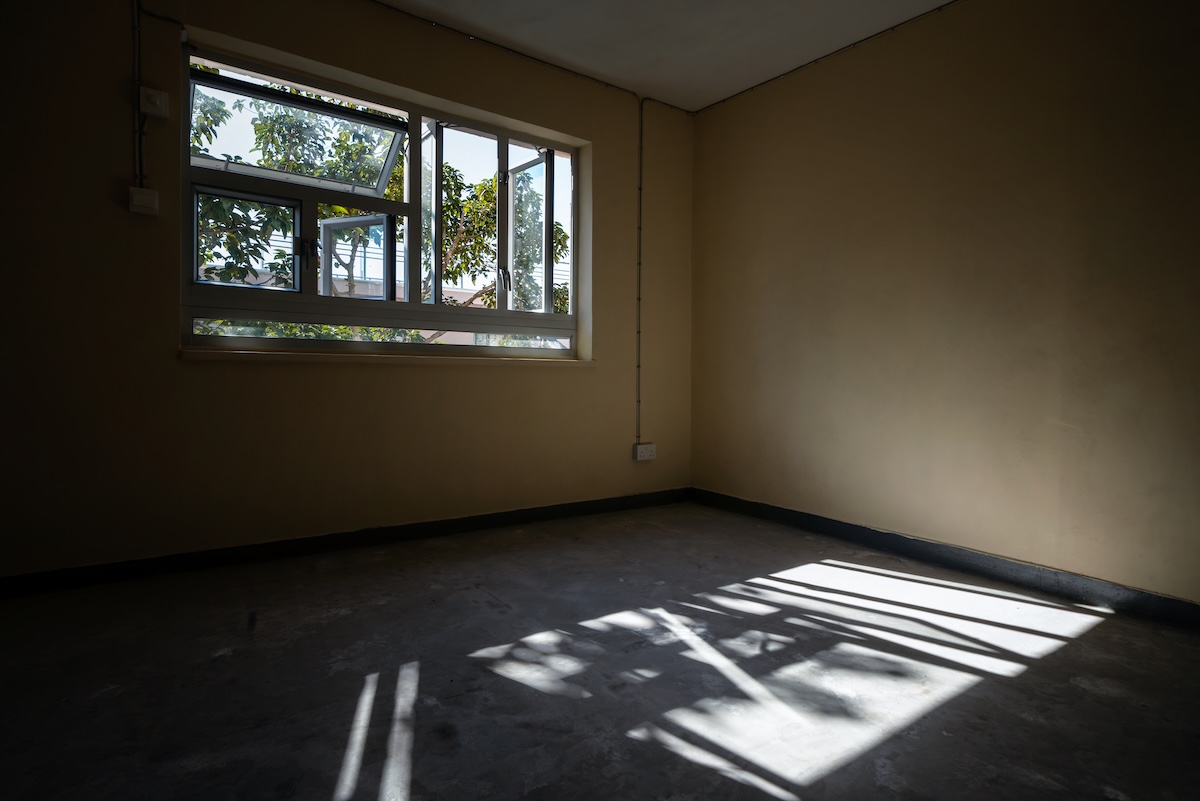
Wide windows bring natural light into the interior, enhancing the sense of space.
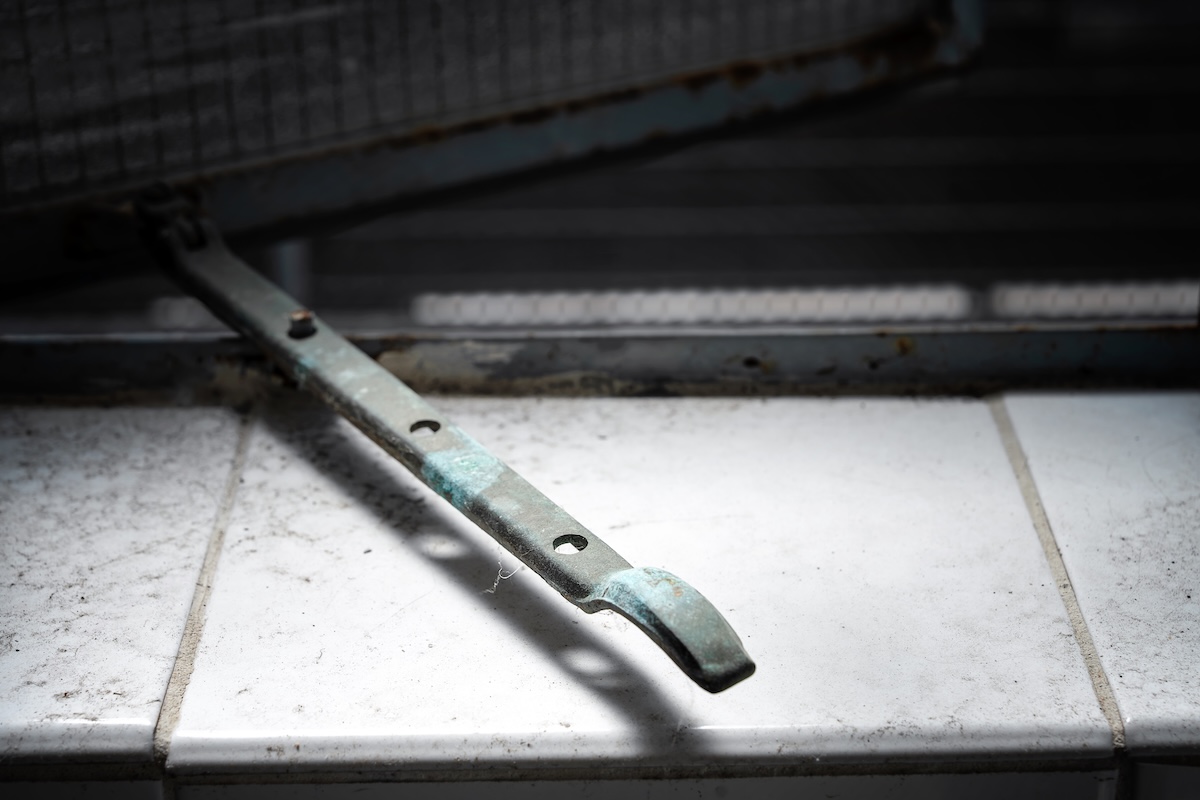
Some units retain the simple yet practical push-out window stays common in the 1950s and 60s, allowing for flexible angle adjustment and strong support against high winds.